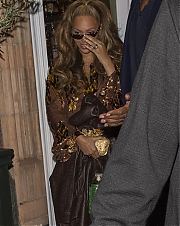
The set also starts at No. 1 on Top Country Albums, making Beyoncé the first Black woman ever to have led the list.
Beyoncé’s Cowboy Carter gallops in at No. 1 on the Billboard 200 albums chart (dated April 13), debuting with 407,000 equivalent album units earned in the U.S. in the week ending April 4, according to Luminate. It’s the superstar’s eighth No. 1 on the all-genre Billboard 200.
With 407,000 units earned, Cowboy Carter claims the biggest week of 2024 and the largest since Taylor Swift’s 1989 (Taylor’s Version) bowed with 1.653 million units on the Nov. 11, 2023-dated list. Cowboy Carter’s launch is also Beyoncé’s biggest week, by units, since her Lemonade album debuted at No. 1 with 653,000 units (mostly from traditional album sales) on the May 14, 2016, chart. The new effort also lands Beyoncé her biggest streaming week ever.
Cowboy Carter also launches at No. 1 on Billboard’s Top Country Albums, Americana/Folk Albums and Top Album Sales charts. She’s the first Black woman ever to have led the Top Country Albums list, dating to its January 1964 inception. Cowboy Carter also claims the biggest week for a country album, by units earned, since last July, when Taylor Swift’s Speak Now (Taylor’s Version), opened at No. 1 on the July 22, 2023 chart with 716,000 units.
Cowboy Carter was introduced by the singles “Texas Hold ‘Em” and “16 Carriages,” which were released during the Super Bowl festivities on Feb. 11. The tracks debuted and have peaked (through the charts dated April 6) at Nos. 1 and 9, respectively, on Billboard’s Hot Country Songs chart, marking Beyoncé’s first entries on the tally. They have also reached Nos. 1, for two weeks, and 38 on the all-genre Billboard Hot 100 songs chart.
Of Cowboy Carter’s first-week unit sum of 407,000, SEA units comprise 232,000 (equaling 300.41 million on-demand official streams of the set’s songs), traditional album sales comprise 168,000 and TEA units comprise 7,000. With 300.41 million on-demand official streams, Cowboy Carter earns Beyoncé her biggest streaming week ever and the fourth-largest for a country album.
Cowboy Carter marks Beyoncé’s eighth No. 1 on the Billboard 200 albums chart. She previously led the list with Renaissance (in 2022), Lemonade (2016), her self-titled album (2013), 4 (2011), I Am… Sasha Fierce (2008), B’Day (2006) and Dangerously In Love (2003). Beyoncé breaks out of a tie with Janet Jackson for the fourth-most No. 1s among women. Swift has the most, with 13, followed by Barbra Streisand (11), Madonna (nine), Beyoncé (eight) and Jackson (seven).
Cowboy Carter’s sales were supported by the album’s availability across a number of configurations, released on March 29. It was issued as standard 19-track edition on vinyl (across four variants, each pressed on different color vinyl [black, red, white and blue] with alternate back cover artwork), a CD with an additional song (“Flamenco”) and a digital download and streaming edition (both in clean and explicit versions, with three bonus songs “Flamenco,” “Spaghetti” and “Ya Ya,” plus two interludes). The CD edition was issued in four variants (each with different back cover art). Two of the variants were sold as stand-alone items, while two of the CDs were only available inside two deluxe boxed sets (each with a different branded T-shirt contained inside a branded box). All physical configurations of the album were sold exclusively through Beyoncé’s official webstore, while the digital download and streaming editions were widely available.
The vinyl edition of Cowboy Carter sold 62,000 copies (across its four variants combined), marking Beyoncé’s biggest week on vinyl and the largest week for any vinyl album in 2024.
Cowboy Carter boasts an eclectic lineup of billed guest artists, including Tanner Adell, Beyoncé’s daughter Rumi Carter, Miley Cyrus, Willie Jones, Tiera Kennedy, Linda Martell, Willie Nelson, Dolly Parton, Post Malone, Reyna Roberts, Shaboozey, and Brittney Spencer. Among the many additional players on the album: 070 Shake, Jon Batiste, Ryan Beatty, Gary Clark Jr., The-Dream, Rhiannon Giddens, Paul McCartney, Pharrell, Robert Randolph, Nile Rodgers, Raphael Saadiq, Sara Watkins and Stevie Wonder.
The superstar received her award from Stevie Wonder.
Beyoncé received her much-deserved Innovator Award at the 2024 iHeartRadio Music Awards on Monday night (April 1), and the “Texas Hold ‘Em” superstar took the stage to accept her trophy from a fellow icon, Stevie Wonder.
“Whenever anyone asks me if there’s anyone I could listen to for the rest of my life, it’s always you. God bless you,” she told the “Isn’t She Lovely” singer, thanking him for playing the harmonica on her version of Dolly Parton’s “Jolene,” featured on her freshly released album, Cowboy Carter.
Wonder then sweetly told Bey, “I just want to thank you for motivating the world to becoming a better place.”
During her heartfelt acceptance speech, Beyoncé shared what being an innovator means to her. “Innovation starts with a dream, and the road to execute that dream can be very bumpy. Being an innovator is doing what everyone believes is impossible,” she told the crowd, dressed in line with her current country era, rocking a leather jumpsuit with fringe, as well as a big belt with a buckle and a sleek black cowboy hat. “Being an innovator often means being criticized, which often will test your mental strength. Being an innovator is leaning on faith and trusting that God will catch you and guide you.”
She continued, “To all the record labels, every radio station, every award show, my hope is that we’re more open to the joy and liberation that comes from enjoying art with no preconceived notions. I want to dedicate this award to all the innovators who have dedicated their lives and their art to creating shifts. Thank you for your sacrifice and your powerful forces and your dauntless spirit.”
Bey then thanked the artistic innovators who inspired her, including Sister Rosetta Tharpe, Tracy Chapman, Linda Martell, Prince, Andre 3000, Tina Turner, Michael Jackson and Wonder, applauding them for “executing your dream so we can all follow.”
The “Break My Soul” singer wrapped up by thanking her team at her Parkwood Entertainment company, as well as her husband Jay-Z, whom she called “my rock, my best friend,” and her three children — 12-year-old Blue Ivy and six-year-old twins Sir and Rumi — “who continue to be my inspiration and biggest blessing.”
Beyoncé’s Cowboy Carter arrived on Friday (March 29) and officially became Spotify’s most-streamed album in a single day in 2024, and marked the most first-day streams for a country album by a female artist in the history of Amazon Music.
Beyonce has released her eighth solo studio solo album, entitled ‘Cowboy Carter‘!
The album is quickly creating waves as the album catapults Beyonce deep into a genre that she has previously only dipped her toes in, Country. However this album isn’t a “Country album, it’s a Beyonce album“.
The album returns to the origins of Country music but offers a fresh, updated spin with genres born from it. With features from the likes of Country legends like Dolly Parton, Linda Martell, and Willie Nelson, she also works with known names like Miley Cyrus and Post Malone. However, Beyonce wouldn’t be BEYONCE if she didn’t open doors for those following her, bringing along up and coming black Country artists Brittney Spencer, Reyna Roberts, Tanner Adell, Tiera Kennedy, Shaboozey, and Willie Jones. One of the more unexpected features on the album comes from Beyonce’s own daughter, Rumi Carter.
The album showcases 27 perfectly crafted tracks that lasts 1 hour and 18 minutes, however the journey through the music doesn’t is so vivid that it doesn’t feel that long.
The mogul speaks on founding her new hair care line, Cécred, building a legacy and uniting the deeply personal with the professional.
BY BROOKLYN WHITE
Beyoncé Knowles-Carter wears quite a few hats. She juggles life as a married mother of three with being the greatest living entertainer—two undertakings that are brain- and body-bending separately, and nearly inconceivable when combined. Her pointed manicures are the needle under which global interest spins. One hip bounce, one social post, one brand mention: That’s all it takes to send the public into orbit. She’s mentor, mountain, and muse—every woman and every woman. Over the years she’s launched multiple ventures, including House of Deréon, Parkwood Entertainment, BeyGOOD and IVY PARK.
Her latest undertaking has technically been on the burner since her youth—but more tangibly since 2018. It branches from her family’s generational focus on hair, taking root in the idea of self-care as ritual. She first teased the project in May 2023 via Instagram, where fans assumed the sprays and pumps before her were filled with self-made hair elixirs. She, and all involved, have been characteristically mum about the offering—until now.
Beyonce for ESSENCE March/April Beauty Issue on stands Feb 27.
“Hair has always been a very big part of our lives,” says Ms. Tina Knowles. “Just as fashion saved our family, hair is how we made a living.” In Beyoncé’s formative years, Ms. Tina was a hairdresser who owned and operated her own salon. She says her career in cosmetology is but a continuation of what Black people have done for ages. “In the culture of Black folks, all the way from the beginning: If you could do some hair, you’ll never be broke,” she explains. “I told my kids that. My mama told me that. So it’s just our legacy, and this full-circle moment feels amazing.”
The brand is called Cécred, a portmanteau of the singer’s name and the reverence she has for her own hair, and others’. Throughout centuries and across nations, hair has symbolized power for both owners and institutions. It is almost treated as separate from the body and more in line with the inner being. In acknowledgment of hair’s distinct role in life and culture, and out of longstanding interest in its wellness, Beyoncé formulated the eight-piece collection, due out February 20 on Cécred.com. It includes a clarifying shampoo and scalp scrub, hydrating shampoo, moisturizing deep conditioner, a reconstructing treatment mask, a moisture-sealing lotion, a nourishing hair oil, a fermented rice and rose ritual treatment, and a “shaking vessel” that allows you to blend the ritual treatment. Together, they’ll strengthen and smooth the hair, and also help it recover from any damage. The entire line is made possible through the advent of a custom technology: a patent-pending bioactive keratin ferment. Naturally, it’s infused with honey.
Fittingly, Destiny’s Child first topped the Billboard Hot 100 with “Bills, Bills, Bills,” which had a music video that took place in a hair salon. It was an homage to the environment that birthed Beyoncé and is evidence of her enduring interest in hair. More recently, the music mogul’s “Formation” video included a scene shot in a beauty-supply store. Yet Beyoncé isn’t the first in her family to make hair products; her mother once blended up her own formulas, too. “Of course, I became a mixologist,” Ms. Tina says. “Back then there was no one product that mixed high-tech hair care with the nourishing moisturizers and oils so vital to textured or color-treated hair, so I mixed the two. I was told Black women’s hair could not have color and perm at the same time. I proved that theory wrong. Now Cécred has the latest science with tried-and-true rituals passed down from generations before.”
Ms. Tina’s parents were Louisiana natives, a fact Beyoncé declares with pride. As the singer’s grandmother, Agnéz Deréon, was coming up, an innovative entrepreneur, also from Louisiana, was becoming a pivotal presence in Black history. Madam C.J. Walker is regarded as the first woman to become a millionaire by her own means. Her cause was righteous. In the aftermath of the Reconstruction era, and with the introduction of Jim Crow, Black Americans continued to be socially and economically trampled, leaving many without the tools to effectively care for their hair. After experiencing her own hair trials, Walker blended well-known ingredients and founded an eponymous hair business. Of Walker, it was widely said that “as a hair grower, she has no equal.’’ She was a star who fought for her own glimmer—and was determined to help others uncover theirs as well. Those who understand the significance of her hair and scalp treatments intimately are able to recognize her sincerity and communal investment. Over 100 years later, another Southern, empire-minded talent is offering up her own hair recipes.
“My mom would say, ‘Go put some grease in your hair because it looks really dry,’ and that meant oiling it and keeping it moisturized,” Ms. Tina says of the messages she received in her family growing up. “So all of those things that my mom did, like using olive oil and honey and egg whites for the protein, were all good for our hair and also for a good old press. These are all tips from my mom, and she just passed them all down.”
The framing of Cécred as an ambitious stake in the earth, as well as Beyoncé’s rightful inheritance, cannot be understated. It is the fruit of her labor. Now, as the founder and chairwoman of her own hair care brand, she stands on the shoulders of women who loved her before she was born. She seeks to honor them at every turn, which means even the most minuscule aspects of the line were assiduously designed. Nothing can be amiss, because she feels that this is bigger than her. And, as she shares with ESSENCE, she’s ready for the past and the future to finally meet.
ESSENCE: You’ve talked about your experiences growing up in your mother’s salon. Can you tell us a bit more about your time there?
Beyoncé: I have vivid memories of my mother working as a hairstylist right from our home. She built a small salon at the back of our house, and I can recall catching glimpses of her while I watched cartoons or played with my dolls and toys. These moments are etched into every corner of my childhood memories.
I saw her shampooing and trimming hair, transforming women, leaving them feeling really good. Looking back, it was more than just a hair appointment—it was therapy. I worked in her salon, sweeping the floors and helping out where I could. I used to eavesdrop and listen in on their conversations intently. It was a sacred space for these women. She was so good and so talented that eventually, her clientele outgrew her at-home salon. So that’s when she opened her first hair salon, Headliners. I remember the early sketches and my mom inviting me to be a part of the design process, even though I was just a youngin’. But that’s my mother. Our family has always had the spirit of collaboration.
My mom had a roster of amazing clients at her salon, and while the environment was therapeutic for them, it was also for me. She found a therapist for me, during a period when I was extremely introverted and hardly spoke. It was in her salon that I realized my dreams of being a performer—inspired by one of her clients who happened to be an opera singer. I was captivated by her stories of a recent trip to Germany. In awe, I distinctly remember telling my mom that I wanted to be just like her client. So much of the fabric of who I am came from her salon. It is something that just connects to all of my senses, and it’s a beautiful place to grow up. That’s my foundation—and I think as an artist, so much of my bold experimentation with hair comes from being inspired by art and sculptures; getting creative with braids; figuring out new techniques; and exploring ways to maintain hair growth with protective styles and wigs, while still feeling fabulous. It all stems from my experiences growing up in my mother’s salon.
You famously cut your hair into a pixie in 2013 and had swaths of women following suit. What can you share with us about that decision? Did it reflect a kind of life change?
It did. That’s right. I love how we associate a certain hairstyle with moments in our lives, like that short-hair moment. I remember the day I decided to just cut all my hair off. I didn’t have a particular style in mind. It wasn’t an aesthetic choice, but it was a very big emotional transformation and metamorphosis that I was going through. So much of my identity as a performer has been connected to flowing hair. Cutting my hair off was me rebelling against being this woman that society thinks I’m supposed to be. I was a new mother, and something about the liberation of becoming a mother made me want to just shed all of that. It was a physical representation of me shedding the expectations put upon me. I just wanted it off. Neal Farinah, my hairstylist and friend, was freaking out because it was really long, really thick and really healthy. I just got the scissors and chopped it off. It was very intentional. And it was what I needed to do. And after that, I became super brave. It was the first step to many more audacious decisions I made in my life and my career that have led to who I am now.
We’ve seen you rock an array of hairstyles—from braids to an Afro to teased curls—all while leaning into your signature blonde. How do you maintain hair health while having dyed hair? What saves my hair is the technology in the formula we created for our Cécred products. It’s a fermentation made from honey and keratin that helps to stop my hair from breaking and brings the shine back. The technology in the products is effective enough that I don’t need to over- manipulate my hair while I shampoo.
A lot of people don’t know how easy it is to have buildup on your hair from overusing the wrong products. The buildup prevents the hair from receiving the best results from the products. I try to be gentle with my hair. The lather in our silicone-free Clarifying Shampoo and Scalp Scrub is so relaxing, and it gets my hair and scalp so clean without stripping away the moisture. In addition to using the products, I wear my hair pressed, colored, ironed and natural as much as I wear protective styles, depending on what I’m doing. I also use oil for my scalp underneath the braids. When I take my braids down, I focus on cleansing and moisturizing my hair before putting it back up into a protective style. I like to look at these routines more like rituals, because the care and love you give your hair is a special, intimate process that we tend to overlook.
What does the name Cécred mean to you? How did you come up with it?
I have many beautiful memories attached to my hair. The relationship we have with our hair is such a deeply personal journey. From spending my childhood in my mother’s salon to my father applying oil on my scalp to treat my psoriasis— these moments have been sacred to me. The conversations and debates in the salons and barbershops create a sense of community for the people who look to it as a retreat from their everyday lives. For them, it’s a place to feel beautiful and vent, laugh, share secrets and pass down wisdom. It’s the most consistent community gathering we have. It’s so important that it’s a sanctuary.
I think that connection of community, mother and child, father and child, and respect— and allowing yourself to be taken care of, especially for Black women, who are always taking care of everyone else—it’s all sacred. So I took the end of my name, Cé, and made it the beginning of the word sacred to create Cécred. From my mother’s salon, daily rituals with my father, and years of experience in developing a hair care line, the journey has been just that: Cécred.
You’ve been an entrepreneur for nearly two decades. One of your earliest pursuits, House of Deréon, was done in collaboration with your mother, Tina Knowles. What are some words of wisdom you’ve gleaned from her?
I woke up this morning, said my prayers, and really thought about the fact that my mom and I have been talking about this [hair care line] since I was a teenager. And what an honor to be able to do something so special with my mother, and to be able to share that with the world. This is meaningful. She’s a visionary and a brilliant woman and has worked so hard on this brand alongside me. She’s such a gift, and this is a bit surreal for me that it is finally here. It feels like all of her life’s learning, her 70 years, and now my 42 years, are generational and meant to be. Honoring the legacy and the wisdom passed down through generations, and mixing it with science and technology, is part of this line. It was important that we borrowed some of our past and brought it into the future.
This is more than a business to you—it is a part of your birthright. How do you mingle the deeply personal with the professional while prioritizing that it remains sacred?
My priorities are quality and intention. It was important to decide where we invested in our formulations. I knew what I wanted to do, with technology that works for all women and all textures, because I had not been able to find it. I built this from the ground up and funded it myself. First, I had to find the right team with the best experience who also shared my beliefs. This business was led by heart and passion, not by a business plan. We went above and beyond to make decisions based on results and the absolute best science. And better results meant more investment in quality products. Every hair texture deserves testing, research and development. Black women in general are the last to be included in testing. We are often prescribed things based on studies we were not included in. It’s bigger than me, or hair. Now we have created something that celebrates healthy hair for all women, including us. I’m always honored to invest in us.
Cécred is a legacy project for me, one that’s probably the most rooted in my ancestry. It’s so far beyond business. Hair is our lineage; it’s our family story. Having access to proven ingredients, and creating our own technology that is patent-pending—we now have a line that works universally.
What’s your nightly hair routine? Are there any tips or tricks you incorporate?
It’s all about moisture for me—adding oil to my scalp and covering my hair at night so the oils could penetrate. It brings back such great memories of my rituals as a child to maintain a healthy scalp. I wrap my hair up and sometimes sleep in some cute rollers with a net or bonnet, depending on how I am wearing my hair. I try to avoid friction, my hair reverting and using unnecessary heat.
Black women’s sense of self is so often connected to their hair. How do we allow it to bring us joy and accentuate who we are, without it completely defining our personhood?
We can wear our hair natural, straight, braids, weaves and wigs. There’s power in self-expression and in feeling free to show up as we choose, in whatever hair we choose. For me, joy comes from making myself a priority and making my hair a priority. It is really important for me to make time for the sacred rituals of self-care.
One hair ritual I always used was fermented rice water. We put our own spin on it and figured out how to turn it into a powder. All you need to do is add water, so it’s much easier and instant— plus we added rose, so it smells beautiful. I do this when my hair needs it, after I color my hair, after a tour. It’s healing for my hair but also for me. I think one of the beautiful things that inspired this line was respecting these ancient traditions and mixing them with technology and science.
Who are you looking to serve with your hair care line?
I saw in my mother’s hair salon that any textured hair could be healthy and could have growth when properly nurtured. I learned that textured hair could be colored. That women of all races can have fun with different styles and still keep their hair healthy. I picked up many techniques from working with the best hairstylists in the world. Hair is not one-size-fits-all. I see certain types of hair that have multiple textures on one head. Depending on the porosity, the density, the thickness of your hair, if it’s color-treated, if your hair is relaxed—your prescription has to be personalized. I hope we can honor the sacred rituals of our past while providing education and cutting-edge science to the hair care community.
Being the boss is big business. The calls, the tests. Natural pauses and sign-offs. Limbs bent before a glowing laptop. It’s a winding cycle our Beyoncé knows well. It’s also one she embraces. We’ve seen her in action: intrinsically motivated, serious and fixed on a jaw-dropping outcome. It’s in these moments of construction that she’s in her flow, tinkering with the seemingly invisible pieces until all is in place. When you see it actualized, you realize there was never an insignificant part. A visionary knows that before the work has even begun.
In the world of Cécred, Beyoncé is dealing in two worlds she’s grown accustomed to. The separation of business and her heart’s callings isn’t present for her. Each commercial move appears to be guided by a deeper, personal purpose. This has brought about a noticeable freedom that we’ve seen surge through her yields in increasing amounts. Over 25 years into her mainstream career, she’s found her own way to guide, give meaning and let her hair down. Sacred indeed
Cécred, launches Feb 20 on cecred.com
Photographed by Andre D. Wagner
Written by Brooklyn White-Grier
Styled by Shiona Turini Hair Stylist: Neal Farinah at Draped Collective using Cécred Hair Collection Makeup: Rokael using Rokael Beauty at Opus Beauty Nail Technician: Miho Okawara (MiHONAiLS) Set Design by Bette Adams at MHS Artists
Photography Assistants: Tyler Woodford and Juliet Wolf Lighting Director: Tutu Lee Lighting Team: Zack Bartlett, Jake Reardon, Hisham Abahusayn, and Jason Capistrano Digital Technician: Maria Toncoso Gibbs
Wardrobe Supervisor: Ryan Dodson at Parkwood Stylist Assistants: Milton Dixon, EJ Ellison, and Jaiin Kang Hair Team: Nakia Rachon at Parkwood, Ziff Anthony Makeup Assistant: Sarah Thacker Nail Assistant: Ayumi Namaizawa Set Assistants: Nicky Buzzerio, Christian Senrud, George Deacon, M Czerwinski, Graham Law, and David Rose Tailors: Tim White and Shirlee Idzakovich
Beyonce has blessed the hive with more than we thought we were getting today! Rumors swirled last week about a new Verizon commercial during the Super Bowl, and we were all seated… little did we know that she was getting ready to feed us.
Shortly after the commercial aired, Beyonce dropped 2 new singles in an announcement on Instagram. The singles are titled 16 Carriages and Texas Hold ‘Em. The singles serve as the lead singles from her upcoming album, currently being referred to as Act II, which is slated to drop March 29, 2024.
Beyoncé Giselle Knowles-Carter — also known as Queen Bey — could clear nearly $2.1 billion from her “Renaissance” World Tour — some $500 million more than the $1.6 billion Taylor Swift could earn from “Eras.”
Those eyepopping estimates are based on the most optimistic assumptions of the number of fans buying tickets at their concerts and high average ticket prices of about $700.
They also assume the artists take home a considerable share of merchandise proceeds and pay tour expenses of 20% of revenues — leaving them with the other 80%.
“Renaissance” could gross between $275 million and $2.4 billion from tickets alone by the time it ends in September. Beyoncé’s most optimistic ticket revenue estimate — $2.4 billion — is well above Era’s $1.9 billion most optimistic box office.
Due to fans’ pent-up desire to attend in-person concerts at the end of a more than three year pandemic, using optimistic assumptions makes sense to me.
Born in Houston, Texas, Beyoncé entered the music industry in the 1990s with Destiny’s Child; achieved solo success with number-one albums (like Dangerously in Love and B’Day😉 headlined the NFL Super Bowl 50 and so much more.
Odds are good “Renaissance” could be Beyoncé’s most lucrative concert tour — possibly exceeding the revenue she has earned from all her previous concerts combined.
How Beyoncé’s Business Strategy Differs From Swift’s
In addition to being exceptionally talented artists, Beyoncé and Swift are excellent business executives.
A key part of the executive job is choosing a business strategy — making decisions about which products to sell, where to sell them, and how much to charge customers — and executing it flawlessly.
Both artists pursue a differentiation strategy — meaning that they charge premium prices for a higher quality product that may cost more to produce. (Another common business strategy, cost leadership — selling a good product at the lowest price with lower costs — is probably rare among performers).
The experts I interviewed — who have not reviewed their contracts — highlight some business strategy differences and similarities between them:
Swift may retain a larger share of ticket sales than does Beyoncé.
Swift has a more extensive merchandising strategy than Beyoncé.
Beyoncé and Swift have high tour expenses and their average ticket prices for their 2023 tours are around $700.
Swift and Beyoncé share of ticket sales
Swift probably receives between 100% and 110% of ticketing revenues. As David Herlihy, a Northeastern University Teaching Professor and Music Industry Program Coordinator, told me, “Her promoter should be happy to pay her more because he does not have to assume any risk that her concerts will not sell out.”
Beyoncé may receive close to that amount. “Beyoncé could have an escalating rate (based on number of tickets sold) or a flat percentage per ticket. Considering her prior success, she’d certainly command in the upper 90th percentile or more.” according to my May 6 email from Armen Shaomian, University of South Carolina Associate Professor, Entertainment Management.
Sponsors and other partnerships can help top artists guarantee high concert proceeds. “Beyoncé’s case sponsors include several major corporations, such as CITI, Verizon, and Tiffany. Her entire Renaissance tour production is handled by her production company, Parkwood Entertainment, and promoted by Live Nation, which drives a greater percentage of the revenue directly to Beyoncé,” Shaomian explained.
Swift and Beyoncé merchandising strategies
Swift and Beyoncé have different brands and varying merchandising strategies.
Swift has an extensive merchandising strategy. As Herlihy explained, “At each venue she would be likely to sell out 30,000 pieces of merchandise at an average price of $80 per item. Thirty percent of that would go to the venue and the remainder would go to Swift and the promoter.”
This initial estimate of her merchandising revenues was low. As he told me in April, “I recently discovered the venues may charge less of a commission [20% rather than the 30%] I originally cited. Also, that commission is within Taylor’s purview to negotiate down.”
Swift’s strategy is more extensive than Beyoncé’s. “Swift’s aim is to build a lifestyle brand for a certain demographic. Looking at it from a fan angle, Swifties have access to a plethora of year-round options when it comes to fan merch,” Shaomian noted.
These include 10 “Eras” albums she has been selling on her website since January along with “hundreds of merch items, ranging from vinyl albums to activity books and ornaments,” he wrote.
Beyoncé’s website — which offers downloads of her singles and some of her vinyl records for purchase — features far less merchandise than Swift’s does and will generate less profit than hers.
However, Beyoncé’s lack of online merchandising may result in high priced concert merch. “The lack of merch on Beyoncé’s online shop could also be a part of her strategy, in that tour-specific merch will only be available for purchase during her concerts, most likely at a premium,” Shaomian suggested.
Swift and Beyoncé ticket prices and costs
One thing Swift and Beyoncé share is high average ticket prices. Shaomian told me last month that Swift’s average ticket price is likely $700 or more.
Beyoncé’s average ticket prices could be $685 or more.
On May 6 he told me, “Ticket prices are only going up, and there are large sections of tickets on Beyoncé’s tour dedicated as B-Hive and Club Renaissance close to the stage, along with some shows where the entire floor level is a standing room club setting (Stockholm for example).”
Such tickets are “all sold at a premium. Think of it as a flight having more first and business class seats that are sold at a premium, which pushes up the average fare,” he concluded.
Swift probably keeps 80% of her revenues. As Herlihy explained last year, “She has to pay taxes, her crew, venue rental, and tour expenses — possibly redundant trucks, crews, security, musical instruments, and so on. These expenses could range between 20% and 25% of her revenue.”
He thinks marketing expenses for “Eras” were lower than normal. “Because the shows were an automatic sell out, the expenditure of huge promotion and marketing dollars to stimulate sales was somewhat unnecessary—thus less of a deduction off the top,” he says.
Both artists have high tour expenses. “I have seen quotes of 50 semis for ‘Eras.’ That is huge! I’d anticipate Beyoncé being close to that judging by her last ‘On The Run Tour II.’” noted Shaomian.
Renaissance Ticket Sales Estimates
“Renaissance” ticket revenues could range from $275 million to $2.5 billion.
Conservative Renaissance revenue estimates range from $275 million to $428 million
In early February, Billboard estimated Renaissance would generate between $275 million and $428 million in ticket revenue using the following assumptions to generate the $275 million estimate:
Renaissance to host 41 shows
Average ticket price: $200
Share of ticket revenues: 100%
Average revenue per show: $6.71 million
With four more shows, Renaissance could generate $300 million in revenue. Billboard estimated in February.
By May 7, the number of Renaissance shows had expanded from 41 to 57, according to Ticketmaster.
Should Beyoncé perform at 57 concerts, using Billboard’s $6.71 million in revenue per show, Renaissance would generate $382 million in revenue.
Using the high end estimate of Billboard’s per show revenue of $7.5 million, Renaissance could generate ticket sales of about $428 million.
Optimistic estimate ranges from $713 million to $2.4 billion
Using more optimistic assumptions about the number of tickets sold at each concert and a higher average price per ticket, I estimate that Renaissance tour revenue could range from $713 million to $2.4 billion. Here are the most significant assumptions I used:
All 57 concerts are completely sold out.
The average concert capacity per venue totals 65,860 fans, based on my analysis of data from each venue.
95% of the average number of fans in the venue buys tickets because artists block off seats for their stage set and give away some seats at no charge, Shaomian told me.
The low and high average ticket price ranges from $200 (per Billboard) to $678, according to TicketSmarter.
Beyoncé’s Previous Concert Tours
Beyoncé is likely to surpass $1 billion in lifetime gross ticket sales by the time she collects her Renaissance proceeds. As Billboard reported, she “has grossed $767.3 million and sold 8.9 million tickets across 375 shows, including those with Jay-Z and the Verizon Ladies First Tour, a co-headline run with Missy Elliott and Alicia Keys in 2004.”
Here are the proceeds of some of her most recent tours:
On the Run (2014) with her husband Jay-Z grossed $95 million, according to Billboard.
Formation World Tour (2016): $256 million, per Complex.
On the Run II (2018): $254 million in gross revenue, Forbes reported.
If Beyoncé reaches the high end of my most optimistic estimate, “Renaissance” will far surpass the gross revenues of all her previous concerts.
How Much Beyoncé And Swift Will Take Home
Beyoncé could earn higher proceeds from “Renaissance” than will Swift from “Eras.”
More specifically, “Renaissance” proceeds for Beyoncé could range between $680 million and nearly $2.1 billion — using $200-per-ticket at the low end and $648, respectively. That surpasses the profit range of $553 million and $1.62 billion for “Eras.”
“Renaissance” profit
Queen Bey’s profits from “Renaissance” derive from the following assumptions:
Gross ticket sales ranging from $751 million and $2.57 billion based on the low and high average prices for all 52 concerts.
Merchandise revenue of about $171 million based on the assumption that she will sell 30,000 items at an average price of $100 (assuming that her prices will be higher than Swift’s since they are only available at the concerts).
Beyoncé would keep 80% of the merchandise revenue (per Herlihy)
She would subtract off 20% of her ticketing and merchandise revenue share, per Herlihy, to pay for tour expenses — keeping the other 80% as Herlihy suggested.
“Eras” profit
Taylor Swift — who is about eight years younger than Beyoncé — potentially has many years to surpass what is likely to be a boffo “Eras” box office this year.
Swift could gross between $620 million and $1.9 billion from “Eras” — depending on whether the average ticket price is $215 or $700.
Using similar assumptions regarding her take of merchandise sales at the concerts and tour expenses, Swift would net $553 million — assuming an average ticket price of $215 — and as much as $1.6 billion if her average “Eras” ticket price is $700.
After a three year pandemic, two great artists — and business executives — are charging premium prices to full houses as they cash in on their talent
Renaissance has debuted at #1 on the Billboard 200 with 332k in sales. Of Renaissance’s 332,000 equivalent album units earned, album sales comprise 190,000; SEA units comprise 138,000 (equaling 179.06 million on-demand official streams of the set’s tracks), and TEA units comprise 4,000.
Renaissance logs the largest streaming week for an album by a woman in 2022 by on-demand official streams earned, with 179.06 million. It’s also the seventh-biggest streaming debut among all albums in 2022, and Beyoncé’s largest streaming week ever.
In terms of traditional album sales, with 190,000 sold, Renaissance posts the third-largest sales week for an album in 2022, and the biggest by a woman. The only bigger sales weeks so far this year were captured by the opening stanzas of Harry’s House (330,000) and BTS’ Proof (266,000).
Renaissance sold 121,000 copies on CD, 43,000 via digital downloads and 26,000 on vinyl.
Renaissance’s initial album sales figure is largely driven by direct-to-consumer sales of the album through internet retailers, with 72% of its first-week sales coming through web-based sellers (136,000 of 190,000). Those sellers included Beyoncé’s official webstore (where she sold four limited edition deluxe boxed set editions of the album containing a T-shirt and a CD – all of which are sold out).
Beyoncé’s webstore was also the exclusive seller in the tracking week of the album’s vinyl LP, which had a limited pressing and an alternative cover and sold 26,000 copies. That marks the largest sales week for an R&B/hip-hop album on vinyl by a woman in the modern era, since Luminate began tracking sales in 1991. The vinyl LP sold out on Beyoncé’s webstore before the album’s release on July 29. On Sept. 16, the album will garner a wide release on vinyl through all retailers, with expanded packaging and its standard album cover.
While Renaissance’s internet-based sales were hefty, the album would have still been No. 1 on the Billboard 200 without any sales from internet sellers. Further, the set would have been No. 1 without selling a single copy, as it still would have perched atop the list from only streaming activity (with streaming equaling 138,000 SEA units).
Finally, as noted earlier, Renaissance is the first No. 1 album on the Billboard 200 by a solo woman since Adele’s 30.
International Success
By its second day of release, Renaissance was outselling the rest of the week’s top five best-selling albums combined in the UK. The album debuted at number one on the UK Albums Chart, becoming Beyoncé fourth album to do so as a solo act, and her fifth including Destiny’s Child. The album also debuted at number one on the Official Vinyl Albums Chart. It had outsold its nearest rival Harry Styles’ album Harry’s House by 3:1. In Ireland, Renaissance debuted atop the Irish Albums Chart, becoming Beyoncé’s fifth number one album in the country. Simultaneously, “Break My Soul” also peaked at number one on the Irish Singles Chart, allowing Beyoncé to score an Irish Chart Double. In France, Renaissance debuted at number one on the SNEP albums chart, becoming Beyoncé’s first number one album and her fourth top ten album in the country. Previously, 4 was Beyoncé’s highest-charting album in the country, peaking at number two in 2011. Additionally, the album was the first album by a female artist to top the chart in 2022.
#1 Song To Match
Along with a #1 album, Beyonce tops the Billboard Hot 100, with Renaissance’s lead single, “Break My Soul”.
“Break My Soul,” released on Parkwood/Columbia Records, becomes the 1,140th No. 1 in the Hot 100’s 64-year history.
Airplay, sales & streams: “Soul” drew 61.7 million radio airplay audience impressions (up 8%) and 18.9 million streams (up 114%) and sold 13,000 downloads (up 113%) in the July 29-Aug. 4 tracking week, according to Luminate, as the song claims dual top Streaming and Sales Gainer honors on the Hot 100.
The track vaults 25-3 on Streaming Songs and holds at its No. 4 high on the Radio Songs chart.
In addition to its original version on Renaissance, “Soul” was available in six alternate forms during the tracking week: its Honey Dijon, Terry Hunter and will.i.am remixes; its Nita Aviance club mix; and a cappella and instrumental versions.
As it reaches No. 1 on the Hot 100, “Soul” concurrently climbs to the top of the Hot R&B/Hip-Hop Songs and Hot R&B Songs charts, which use the same multi-metric methodology as the Hot 100. Beyoncé adds her 10th No. 1 on the former and her third on the latter (which began in October 2012). The track also tops the multi-metric Hot Dance/Electronic Songs chart for a sixth week. “Soul” makes history as the first song to lead all four lists
Welcome to The Beyonce World. We are your oldest online Beyonce fan source, and we are still keeping you up to date with Beyonce. Our growing photo gallery catalogs more than 85,000 photos spanning her career. If you enjoy the site, make sure to check us out on social media and all other platforms that allow us to express our love for Queen Bey.
Latest Projects
Latest Albums
Album: B'Day (20th Anniversary) Release Date: September 4, 2026